StageCraft Toronto
Overcoming the Impossible
Performance style: Clowning & Comedic Theatre
Theme: Personal challenges, resilience, and growing up
- Date
- March 2026
- Location
- Toronto, Canada
- Participants
- Middle School Students
Session Overview
Growing up brings new responsibilities, expectations, and challenges that can sometimes feel impossible to overcome. This session explores how young people respond to setbacks, uncertainty, and social pressure through humour, physical expression, and creative storytelling.
Using techniques from Clowning and Comedic Theatre, students experiment with exaggerated characters, physical comedy, and unexpected situations to explore serious experiences in an approachable way. Rather than aiming to produce flawless performances, the session encourages students to embrace mistakes, take creative risks, and discover how challenges can become opportunities for storytelling.
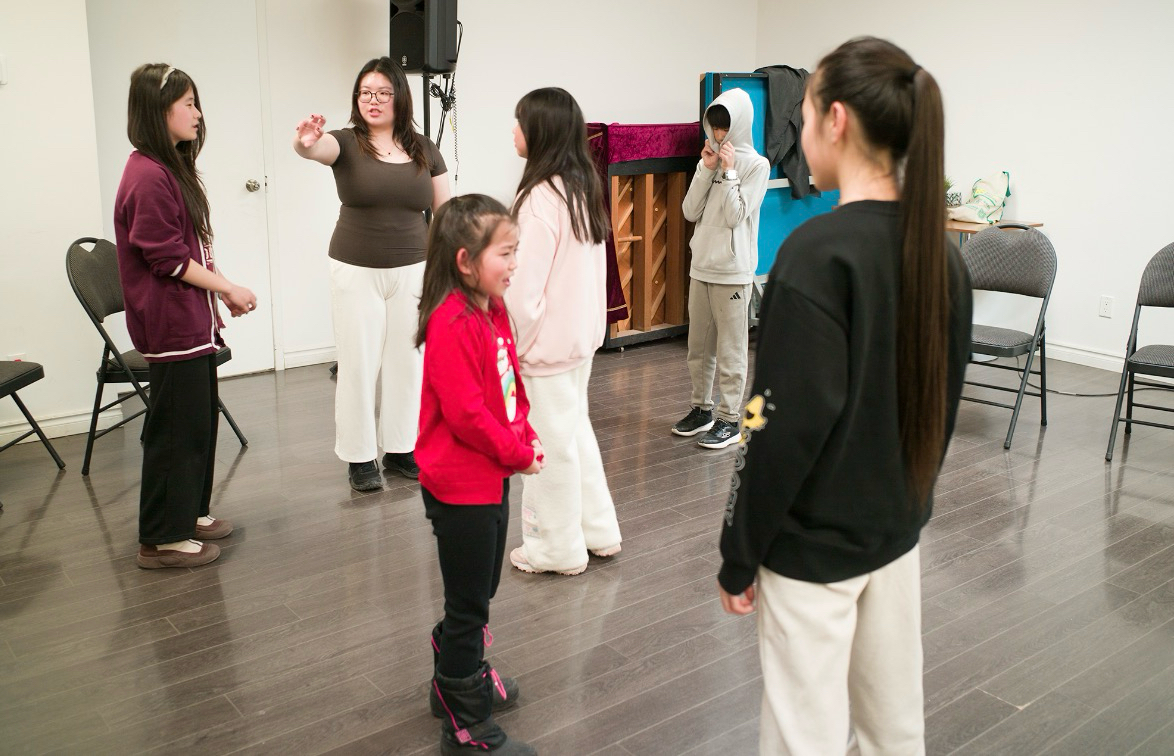
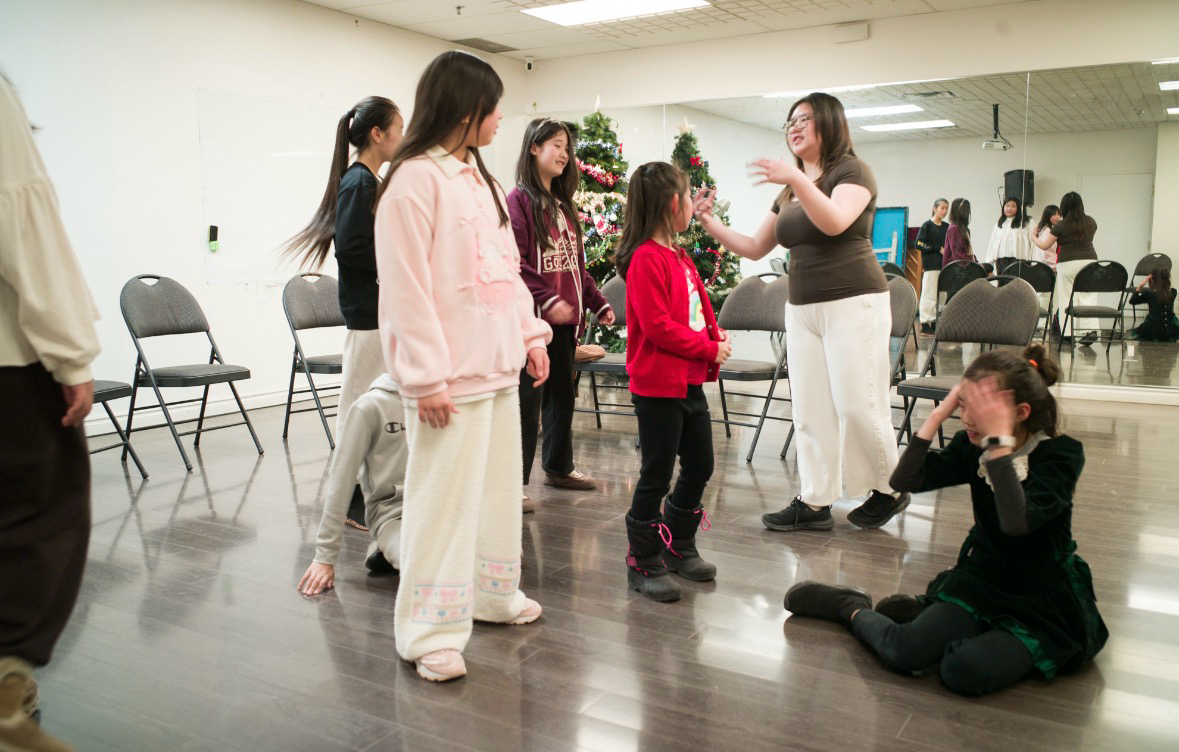
01 / Drama Games & Creative Warm-Ups
01The Impossible Task
Purpose: Build confidence, encourage physical expression, and introduce comedic exaggeration.
How It Works:
- Students receive a seemingly simple imaginary task, such as opening a door, carrying a box, or crossing a room.
- As they begin, the facilitator introduces increasingly ridiculous obstacles.
- For example, the door becomes impossibly heavy, the box starts moving by itself, or the floor becomes extremely slippery.
- Students must improvise their reactions and develop creative ways to overcome the obstacles.
Challenge: Students repeat the activity in pairs, where one person creates obstacles and the other must respond without breaking character.
Theatrical Focus: Exaggeration, physical comedy, timing, and improvisation.
02Failure Olympics
Purpose: Encourage creative risk-taking and help students become more comfortable making mistakes.
How It Works:
- Students participate in a series of intentionally absurd challenges, such as performing the world's slowest race or delivering an overly dramatic speech about losing a pencil.
- The objective is not to win, but to commit fully to the performance.
- After each challenge, students reflect on which acting choices made the moment entertaining or memorable.
Challenge: Students invent their own humorous challenges for others to perform.
Theatrical Focus: Commitment, comedic timing, confidence, and character expression.
03Yes, And... Challenge
Purpose: Develop collaboration, active listening, and spontaneous thinking.
How It Works:
- Students work in pairs to improvise a short scene.
- One person introduces a fictional problem, such as missing an important train or accidentally entering the wrong classroom.
- Their partner responds by accepting the situation and adding something new, using the principle of "Yes, and..."
- The scene develops through cooperation rather than rejecting one another's ideas.
Challenge: Groups must create a scene in which three unexpected problems arise, requiring characters to adapt together.
Theatrical Focus: Improvisation, ensemble trust, and shared storytelling.
02 / Exploring Challenges Through Theatre
01The Invisible Wall
Focus: Understanding obstacles and different responses to challenges.
How It Works:
- Students imagine an invisible wall separating a character from something they want to achieve.
- The wall may represent fear of failure, social expectations, uncertainty, or a fictional physical obstacle.
- In small groups, students create three frozen images showing:
- A character encountering the wall.
- The character attempting to overcome it.
- The consequences of their decision.
- Groups bring their frozen images to life through movement and brief dialogue.
Discussion Questions:
- What makes the wall difficult to overcome?
- Does the character need to change their approach?
- Can asking for help be part of overcoming a challenge?
02The Pressure Machine
Focus: Exploring the expectations young people experience.
How It Works:
- Students form groups and use repeated movements and short phrases to create a fictional "machine."
- Each person represents an expectation, such as achieving good grades, fitting in, or never making mistakes.
- One student plays a character attempting to navigate the machine.
- The group experiments with changing the machine's speed, intensity, or structure.
- Finally, students explore how the character could interrupt, change, or escape the machine.
Theatrical Focus: Ensemble movement, repetition, exaggeration, and symbolic storytelling.
03 / Group Scene Creation
From Everyday Challenges to Comedic Performance
Purpose: Give students creative ownership of a theatrical piece while applying the conventions of Clowning and Comedic Theatre.
How It Works:
- Students form groups of 3–5.
- Each group chooses a challenge associated with adolescence and growing up.
- Students develop a short scene featuring a clear character objective, a series of escalating obstacles, and a turning point.
- Groups experiment with exaggeration, repetition, unexpected reversals, and physical humour.
- Facilitators help students organize the scene without prescribing a single solution.
Suggested Performance Concepts:
1. The Perfect Day
A student attempts to plan the perfect day, only for increasingly ridiculous disasters to interrupt every step. The story explores unrealistic expectations and the pressure to control everything.
2. The Impossible Conversation
Two characters repeatedly misunderstand one another, turning a simple conversation into complete chaos. The scene explores communication, assumptions, and the difficulty of expressing oneself.
3. The Wall of Expectations
A character struggles to satisfy conflicting expectations from different people. Through exaggerated movement and dialogue, the ensemble explores how individuals respond to pressure.
4. The Fear of Failing
A character becomes so determined to avoid mistakes that even simple tasks become impossible. The group explores how fear can sometimes create the very problems we wish to avoid.
Performance Requirements:
- Every student contributes to the development of the scene.
- Groups incorporate at least two techniques from Clowning or Comedic Theatre.
- Each performance includes a clear beginning, conflict, and ending.
- Students may draw inspiration from everyday experiences without having to share personal stories.
04 / Rehearsal & Development
Students move from initial improvisations to a structured theatrical piece.
Rehearsal Process:
- Character Development: Identify each character's objectives, personality, and response to challenges.
- Scene Structure: Organize improvised material into a clear sequence.
- Blocking: Experiment with entrances, exits, movement, and the use of stage space.
- Comedic Timing: Explore pauses, repetition, unexpected reactions, and physical exaggeration.
- Peer Feedback: Groups present unfinished scenes and receive constructive suggestions.
- Refinement: Students select which ideas to keep, adapt, or remove before the final showcase.
Volunteer leaders support group discussions, facilitate warm-ups, and help participants develop their ideas without taking over the creative process.
05 / Final Showcase & Reflection
Each group presents a short comedic performance exploring a different challenge associated with growing up.
Performances are brought together under the shared theme Overcoming the Impossible, demonstrating how students can use humour and storytelling to interpret similar experiences in different ways.
Reflection Questions:
- How did your character respond when things went wrong?
- What was the biggest creative risk you took?
- How did your group turn mistakes or unexpected ideas into part of the performance?
- What did you discover about working through challenges with others?
Intended Outcomes
By the end of the session, students will have opportunities to:
- Develop confidence in performance and self-expression.
- Explore comedic timing, improvisation, and physical storytelling.
- Build resilience and become more comfortable taking creative risks.
- Strengthen communication and collaboration skills.
- Experience the full process of developing, rehearsing, and presenting a theatrical piece.